
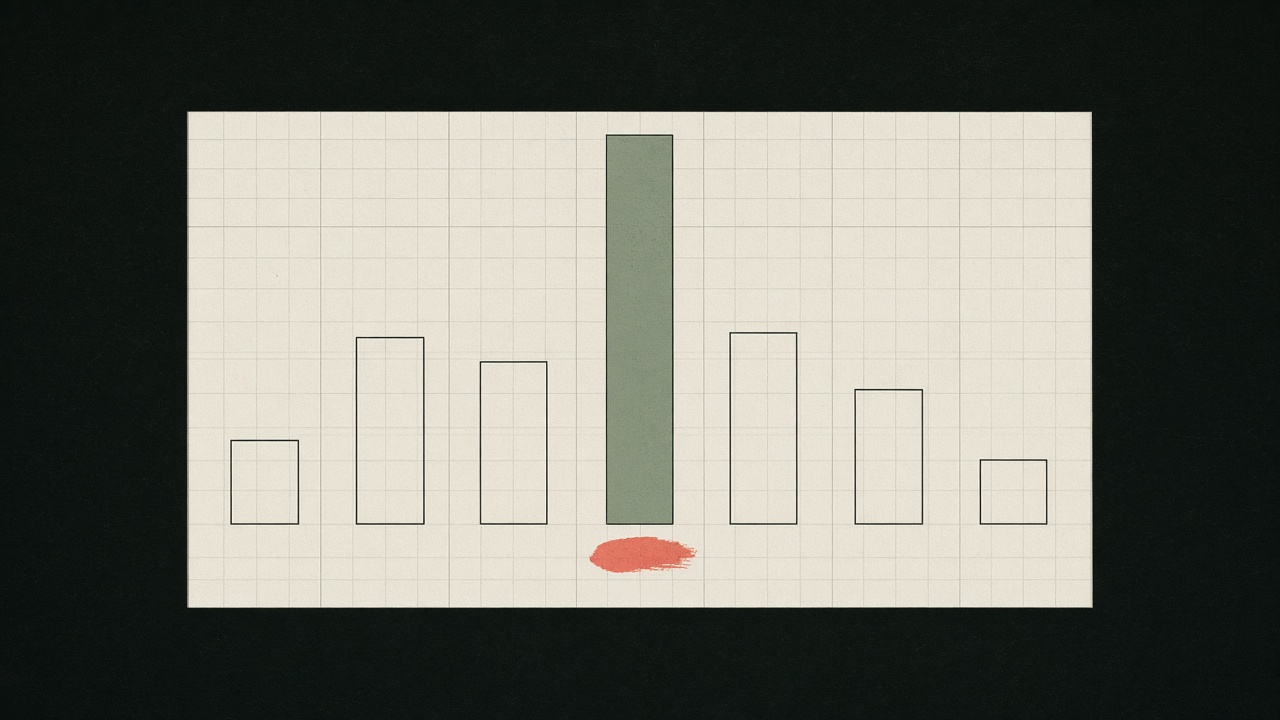
Every automation conversation I have starts with a confident guess about where the time goes. The guess is wrong more often than it is right. That is not a criticism of the owner. The work is spread across many small moments, and small moments do not feel expensive until someone writes them down. So the first step is a week of counting. Tooling comes after, and only for the winner.
The week is a notebook, not a workshop
For five working days, every repetitive task gets a line: what it was, how long it took, whether the output was wrong. No new software. No extras while the notebook is open. At the end of the week the ranking is usually obvious, and it usually surprises the person who was sure the problem was the inbox, or the invoices, or the thing a vendor had just pitched.
Three shapes show up so often that I now expect them.
Re-typing is the quiet one
Someone reads a number off a PDF and types it into a sheet, then types it again into the accounts. Each occasion is two minutes. Across a month it is a part-time job, and it is invisible because it never sits in a block on the calendar. It is also the task most likely to be wrong in a way that compounds: a transposed total becomes a wrong payment becomes an afternoon of apology.
Routing that lives in one person’s head
An enquiry arrives. A person decides who should handle it. The rule is consistent and unwritten. Consistent and unwritten is the exact shape of work a machine can take, once the rule is on paper. Until it is on paper, buying a platform just hires a second place for the same person to click.
What a line in the notebook looks like
I keep the line dull, because a dull line can be counted. “Tuesday, 11:40. Copied eight invoice totals from PDF into the sheet, then into the accounts. Twenty-two minutes. One total was wrong and caught on the second typing.” That is a line. “Admin is a mess” is not a line. At the end of the week I sort by minutes and by whether the output was wrong. The task that is both long and occasionally wrong goes first. The task that is irritating but takes four minutes a week can wait, however loudly it complains.
I also write who does it. If the rule lives in one person, the automation is not a tool purchase. It is a conversation with that person about the rule, and a decision about what happens on the cases the rule does not cover. Those cases are where a careless automation writes to a customer. They stay with a person.
Pick the top line. Give it one number you will look at a month later: hours, error rate, or cycle time. Ship that, with a person approving anything that spends money or writes to a customer, and with a monthly cap on the model bill if a model is in the path. One finished process beats a migration onto a new suite that never finishes.
If it does not move a number you wrote down in advance, it was the wrong thing to automate.
I do not start by putting several businesses on one shared automation desk. Credentials do not get pooled because it is tidier. A shared screen is a separate licence question, and it is a bad first design. The first design is one process, one owner, one way to turn it off.